Hey there! As a supplier of dry type transformers, I often get asked about the short – circuit impedance of these transformers. So, I thought I’d take some time to break it down for you. Dry Type Transformer
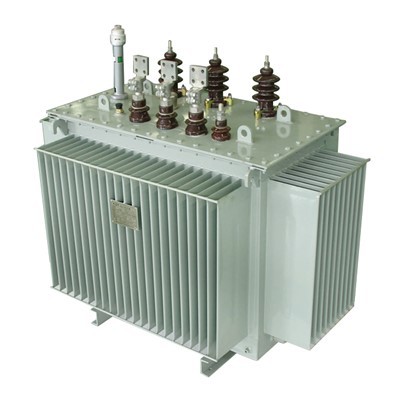
First off, let’s talk about what short – circuit impedance actually is. In simple terms, the short – circuit impedance of a dry type transformer is a measure of the opposition the transformer offers to the flow of short – circuit current. When a short – circuit occurs in an electrical system, a huge amount of current can rush through. The short – circuit impedance acts like a sort of "roadblock" that limits this excessive current.
You know, it’s like when you’re driving on a highway and suddenly there’s an accident. The accident creates an obstacle that slows down the flow of traffic. Similarly, the short – circuit impedance restricts the flow of short – circuit current in a transformer.
Now, how is this short – circuit impedance determined? Well, it’s mainly related to the design and construction of the transformer. The number of turns in the coils, the size of the conductors, and the magnetic properties of the core all play a role.
Let’s start with the number of turns in the coils. If a transformer has more turns in its coils, the short – circuit impedance will generally be higher. It’s a bit like adding more loops to a race track. The more loops there are, the longer it takes for a car to complete the race. In the case of the transformer, more turns mean that the current has to travel a longer path, and this increases the impedance.
The size of the conductors also matters. Thicker conductors have lower resistance, which in turn affects the short – circuit impedance. It’s similar to a water pipe. A wider pipe allows water to flow more easily than a narrow one. In a transformer, thicker conductors allow current to flow more freely, resulting in a lower short – circuit impedance.
The magnetic properties of the core are another crucial factor. The core of a dry type transformer is usually made of materials with good magnetic conductivity. The better the magnetic conductivity of the core material, the lower the short – circuit impedance. It’s like having a super – efficient magnet that can pull the magnetic field lines more effectively, making it easier for the current to flow.
So, why is the short – circuit impedance important? Well, it has several implications for the operation and safety of the electrical system.
One of the main reasons is protection. A proper short – circuit impedance helps in protecting the transformer and other electrical equipment in the system. When a short – circuit occurs, if the impedance is too low, the excessive current can cause overheating, damage to the windings, and even lead to a complete failure of the transformer. On the other hand, if the impedance is too high, it can affect the normal operation of the system, causing voltage drops and reducing the efficiency of power transmission.
It also affects the coordination of protective devices in the electrical system. Circuit breakers and fuses are designed to trip when a certain amount of current flows through them. The short – circuit impedance of the transformer determines the magnitude of the short – circuit current. So, it’s essential to have the right short – circuit impedance to ensure that these protective devices work correctly.
Another aspect is the parallel operation of transformers. When multiple dry type transformers are connected in parallel, their short – circuit impedances need to be closely matched. If the impedances are too different, the transformers may not share the load evenly. This can lead to overloading of one transformer while the other may not be fully utilized.
As a supplier, we pay a lot of attention to the short – circuit impedance of our dry type transformers. We design and manufacture our transformers to have optimal short – circuit impedance values. Our engineers use advanced calculation methods and simulation tools to ensure that each transformer meets the specific requirements of our customers.
We also conduct thorough testing on our transformers. During the testing process, we measure the short – circuit impedance to make sure it’s within the specified range. We understand that different applications have different requirements for short – circuit impedance. For example, in a large industrial power system, transformers may need to have different short – circuit impedance values compared to those used in a small commercial building.
When it comes to choosing a dry type transformer, you need to consider the short – circuit impedance carefully. You should work with a reliable supplier who can provide you with detailed information about the short – circuit impedance of their products. And that’s where we come in! We’ve got the expertise and experience to provide you with high – quality dry type transformers with the right short – circuit impedance for your specific needs.
If you’re in the market for a dry type transformer, don’t hesitate to reach out to us. Whether you’re an electrical contractor, an industrial facility owner, or a utility company, we can help you find the perfect transformer for your application. Our team of experts is always ready to answer your questions and provide you with the best solutions. Contact us today to start a conversation about your transformer needs and let’s find the ideal product for you.
Oil Immersed Transformer References
- Electrical Engineering Handbooks for dry type transformer design and operation
- Industry – standard textbooks on power systems and transformers
Nantong Yawei New Energy Technology Co., Ltd.
As one of the most professional dry type transformer manufacturers and suppliers in China, we’re featured by quality products and good service. Please rest assured to wholesale durable dry type transformer made in China here from our factory. Customized orders are welcome.
Address: Room 28-101, Building 27 and 28, No.333 Kaiyuan Avenue, Sunzhuang Subdistrict, Hai’an City, Nantong City, Jiangsu Province, China
E-mail: admin@nantongyawei.com
WebSite: https://www.nantongyawei.com/
