As a dedicated supplier in the glass lamination machine industry, I’ve witnessed the evolution and diversification of these remarkable machines firsthand. Glass lamination is a process that combines two or more layers of glass with an interlayer, typically made of polyvinyl butyral (PVB) or ethylene-vinyl acetate (EVA), to create a single, stronger unit. This process enhances the safety, security, and performance of glass, making it suitable for a wide range of applications, from architectural to automotive. In this blog, I’ll explore the different types of glass lamination machines available in the market, their features, and their ideal applications. Glass Lamination Machine

Autoclave Glass Lamination Machines
Autoclave glass lamination machines are perhaps the most well-known and widely used type in the industry. These machines use heat, pressure, and a controlled environment to bond the glass layers and the interlayer together. The process begins by placing the glass and interlayer assembly into a large autoclave chamber. The chamber is then sealed, and the temperature and pressure are gradually increased to the desired levels. The heat softens the interlayer, allowing it to bond with the glass surfaces, while the pressure ensures a uniform and bubble-free lamination.
One of the key advantages of autoclave glass lamination machines is their ability to produce high-quality, optically clear laminates. The controlled environment inside the autoclave minimizes the risk of bubbles, impurities, and delamination, resulting in a product that meets the strictest quality standards. Autoclave laminates are also known for their excellent durability and resistance to environmental factors, such as UV radiation, moisture, and temperature fluctuations.
However, autoclave glass lamination machines are not without their drawbacks. They are typically large, expensive, and require a significant amount of energy to operate. The process is also relatively slow, with a single cycle taking several hours to complete. This makes autoclave machines more suitable for large-scale production of high-quality laminates, such as those used in architectural applications, where the cost and time associated with the process can be justified by the quality and durability of the final product.
Vacuum Bag Glass Lamination Machines
Vacuum bag glass lamination machines offer a more cost-effective and flexible alternative to autoclave machines. These machines use a vacuum bag to remove air from the glass and interlayer assembly before applying heat and pressure. The vacuum bag is placed over the assembly and sealed, and the air is then removed using a vacuum pump. This creates a low-pressure environment inside the bag, which helps to remove any trapped air and ensures a tight bond between the glass and the interlayer.
Once the air has been removed, the assembly is placed in an oven or a heating press to apply heat and pressure. The heat softens the interlayer, allowing it to bond with the glass surfaces, while the pressure ensures a uniform and bubble-free lamination. Vacuum bag lamination machines are available in a variety of sizes and configurations, ranging from small, tabletop models to large, industrial-sized machines.
One of the main advantages of vacuum bag glass lamination machines is their affordability and ease of use. They are typically smaller and less expensive than autoclave machines, making them a great option for small to medium-sized businesses or for those who are just starting out in the glass lamination industry. Vacuum bag lamination machines are also more flexible than autoclave machines, as they can be used to laminate a variety of glass sizes and shapes, including curved and irregularly shaped glass.
However, vacuum bag glass lamination machines also have some limitations. The quality of the laminates produced by these machines is generally not as high as those produced by autoclave machines, as there is a greater risk of bubbles, impurities, and delamination. The process is also more sensitive to variations in temperature, pressure, and vacuum levels, which can affect the quality of the final product. Vacuum bag lamination machines are therefore more suitable for applications where the quality requirements are not as strict, such as decorative glass or small-scale architectural projects.
Roll Lamination Machines
Roll lamination machines are a type of continuous lamination machine that uses a set of rollers to apply heat and pressure to the glass and interlayer assembly. The assembly is fed through the rollers, which squeeze and heat the materials together, creating a continuous bond between the glass and the interlayer. Roll lamination machines are typically used for the production of large sheets of laminated glass, such as those used in automotive windshields and architectural glazing.
One of the key advantages of roll lamination machines is their high production speed and efficiency. These machines can produce large quantities of laminated glass in a relatively short period of time, making them ideal for mass production applications. Roll lamination machines are also very versatile, as they can be used to laminate a variety of glass thicknesses and interlayer materials, including PVB, EVA, and ionoplast.
However, roll lamination machines are also relatively expensive and require a high level of technical expertise to operate and maintain. The quality of the laminates produced by these machines is also highly dependent on the quality of the rollers and the precision of the heating and pressure controls. Roll lamination machines are therefore more suitable for large-scale production facilities that have the resources and expertise to invest in these machines.
Vacuum Laminator Machines
Vacuum laminator machines are a type of laminator that uses a vacuum chamber to remove air from the glass and interlayer assembly before applying heat and pressure. The assembly is placed inside the vacuum chamber, and the air is then removed using a vacuum pump. This creates a low-pressure environment inside the chamber, which helps to remove any trapped air and ensures a tight bond between the glass and the interlayer.
Once the air has been removed, the chamber is heated to the desired temperature, and pressure is applied to the assembly using a hydraulic or pneumatic system. The heat softens the interlayer, allowing it to bond with the glass surfaces, while the pressure ensures a uniform and bubble-free lamination. Vacuum laminator machines are available in a variety of sizes and configurations, ranging from small, tabletop models to large, industrial-sized machines.
One of the main advantages of vacuum laminator machines is their ability to produce high-quality, bubble-free laminates with a consistent thickness. These machines are also very versatile, as they can be used to laminate a variety of glass sizes and shapes, including curved and irregularly shaped glass. Vacuum laminator machines are therefore a popular choice for applications where the quality requirements are high, such as in the production of high-end architectural glass and automotive windshields.
However, vacuum laminator machines are also relatively expensive and require a high level of technical expertise to operate and maintain. The process is also more time-consuming than other types of lamination machines, as the vacuum chamber needs to be evacuated and heated before each cycle. Vacuum laminator machines are therefore more suitable for small to medium-scale production facilities that can justify the cost and time associated with the process.
Conclusion
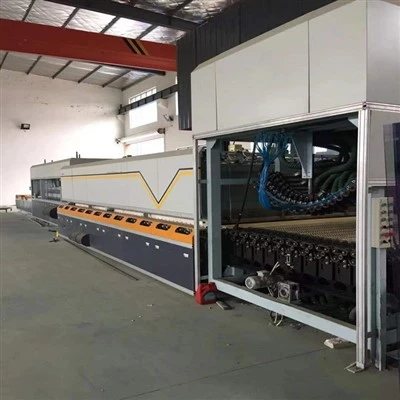
In conclusion, there are several types of glass lamination machines available in the market, each with its own unique features, advantages, and limitations. The choice of machine will depend on a variety of factors, including the production volume, the quality requirements, the size and shape of the glass, and the budget. As a supplier of glass lamination machines, I’m committed to helping my customers choose the right machine for their specific needs. Whether you’re a small business looking for an affordable and flexible solution or a large-scale production facility in need of a high-performance machine, I have the expertise and experience to guide you through the selection process.
Glass Drilling Machine If you’re interested in learning more about our glass lamination machines or would like to discuss your specific requirements, please don’t hesitate to contact us. Our team of experts is available to answer your questions and provide you with a detailed quote. We look forward to working with you to achieve your glass lamination goals.
References
- American Glass Research. (n.d.). Glass Lamination Basics. Retrieved from [Website]
- Glass On Web. (n.d.). Laminated Glass. Retrieved from [Website]
- Pilkington. (n.d.). Automotive Glass Technologies. Retrieved from [Website]
- Saint-Gobain. (n.d.). Architectural Glass Solutions. Retrieved from [Website]
Foshan Sky Glass Co., Ltd.
We are one of the most experienced glass lamination machine manufacturers and suppliers in China. With a professional production team, we are able to meet the needs of the majority of our customers. Please feel free to wholesale advanced glass lamination machine for sale here from our factory. Customized orders are welcome.
Address: Jian Mei Business Center, Nan Hai Town, Fo Shan
E-mail: skyglassmanager18@gmail.com
WebSite: https://www.sky-glassdz.com/
