If you’ve ever stared at a pile of random hose clamps in a hardware bin or walked the aisles of a parts store trying to pick the right one for your build, you’re not alone. As someone who’s spent 8+ years in the hose clamp game—walking workshops, field-tested clamps on everything from construction equipment to backyard barbecues—I get it. The two most common guys people mix up? Worm gear hose clamps and T-bolt hose clamps. On the surface, they look like similar tools that hold hoses tight, but they’re totally different beasts for totally different jobs. Let’s break this down like I’m chatting with a friend over a beer after a long day at the shop. Hose Clamp

First off, let’s get the basics out of the way: neither is “better” by default. The trick is matching the right clamp to what you’re doing, and most folks grab the wrong one at least once early on (I’ve been there too—once I threw a T-bolt on a tiny RV coolant hose and cracked the hose, which led to a weekend stuck at a truck stop. Oops). Let’s start with worm gear clamps, since those are the ones you see everywhere. You know the ones: that little slotted screw, a band that wraps around the hose, a housing that sits on one side, and when you turn the screw, it twists a tiny gear that pulls the band tight.
Worm gear clamps were invented back in the 1920s, originally for automotive use, and they’ve been the go-to for general stuff ever since. Their big thing is ease of use. You can tighten them with a flathead screwdriver, a drill with a socket adapter, even a pair of pliers in a pinch. That’s why you see them on car intake hoses, vacuum lines, garden hose connections, even the water line to your washing machine. But here’s the thing: their tightening range is pretty limited. Most standard worm gear clamps have a gap of about 1/4 inch max between their smallest and largest diameter settings. So if your hose shifts even a little, the clamp might not stay tight, or it might dig into the hose if it’s over-tightened. Also, that tiny gear inside the housing? It’s made of soft metal a lot of the time, and if you over-torque it, the gear strips out. I’ve had customers tell me they stripped three worm gear clamps on a single radiator hose before they realized they were using the wrong tool.
Now T-bolt clamps—those are the beefier ones. You’ve seen these on heavy equipment, big truck air intakes, turbochargers, industrial hoses—stuff that’s under a lot of pressure or vibration. Instead of a slotted screw and a band with gear teeth, they have a solid T-shaped bolt, a band that’s usually made of thicker stainless steel, and two nuts you tighten on either end of the T. The band itself is designed to sit in a groove on the hose fitting, right? So it locks into place instead of just squeezing the outside of the hose. That design changes everything.
T-bolt clamps have a way wider adjustment range—like double or triple what worm gears can do. So if you’re working with a hose that’s slightly stretched or a fitting that’s not perfectly cut, a T-bolt will adapt better. The big win here is clamp load. Because you’re tightening two evenly spaced nuts (instead of a single screw pulling from one side), the pressure is spread all the way around the hose, not concentrated in one spot. That means no pinching, no hose degradation, and it holds up way better under constant vibration. If you’ve ever stood next to a idling semi and felt that whole rig shake? The T-bolt on its air intake is what keeps that hose from flying off, even after years of bouncing down the highway.
Let’s get into the nitty-gritty real-world stuff, because numbers help, but stories stick. I had a customer a few months back who runs a small construction company. He was using worm gear clamps on the hydraulic hoses for his skid steer. Within two weeks, he had three hoses leaking, two of them right on the job site. I sent him a set of T-bolts, and he texted me the next day saying he’d gone a full month without a single leak, even running the skid steer through mud and over rocky trails. Why? Hydraulic hoses run at super high pressure—like 3,000 PSI sometimes—and worm gears can only handle so much of that before the pressure pushes the hose out from under the clamp. T-bolts, though, have a clamping force that’s usually 2-3x higher than a worm gear of the same size, so they don’t budge.
But here’s the catch: T-bolts are harder to install, right? You need a wrench or a socket to tighten those two nuts evenly. You can’t just grab a screwdriver and wing it, like you can with a worm gear. That’s why you won’t see someone slapping a T-bolt on a tiny aquarium hose or a garden hose faucet—there’s no need to mess with that. The extra time to install a T-bolt isn’t worth it for a job that doesn’t need the extra strength and vibration resistance.
Another big difference: material durability. Most worm gear clamps are made of zinc-plated steel. That works fine for indoor or dry applications, but if you’re working in salt water, or around chemicals, or outside in the sun year-round, that zinc will corrode. I’ve had customers call me panicking because their boat’s bilge hose clamps seized up during a fishing trip. T-bolts are almost always made of 304 or 316 stainless steel, which is way more resistant to corrosion. 316 even stands up to salt water, which is why it’s used on boats and marine equipment. A worm gear might rust through in a year; a T-bolt will last 10+ years in the same conditions.
Wait, let’s not forget about hose compatibility. Worm gear clamps wrap around the outside of a smooth hose, right? So if your hose has a ribbed surface, or is a thin silicone hose (common for turbo intakes), a worm gear can dig into the grooves or the soft silicone, leading to leaks over time. T-bolts, on the other hand, are designed for hoses that fit into a grooved fitting, so the band sits in the groove and doesn’t pinch the hose wall. I once saw a customer use a worm gear on a silicone turbo hose, and after a week, the hose had a little cut where the gear was digging in, causing a boost leak that made his truck lose power. Switched to a T-bolt, no more issues.
Let’s talk about cost, because that’s a big one for small businesses or DIYers. A standard worm gear clamp costs like $1 to $3, depending on size. A T-bolt is $5 to $15 for the same size. So if you’re only doing one small repair, the worm gear is cheaper. But if you’re doing a job that needs long-term reliability—like a new coolant system for a tractor, or a air intake for a truck—spending the extra few bucks on T-bolts saves you from having to redo the job in a month. I tell my customers all the time: you get what you pay for. I’ve seen way more people waste money on cheap worm gears that fail early, than people who paid a little more for T-bolts that last.
Another thing people don’t talk about: maintenance. Worm gear clamps can loosen over time, especially under vibration. You might have to go back and tighten them every few months. T-bolts, once they’re tightened to the right torque, stay tight. I had a farmer who used T-bolts on his combine’s fuel hoses, and he told me he only checked them once a year during his annual maintenance, instead of every week like he did with worm gears. That saves him hours of downtime during harvest, which is huge—time is money when you’re dealing with crops that need to be picked before the rain hits.
Wait, let’s clear up a common myth: some people think T-bolts are only for big hoses, and worm gears are only for small ones. That’s not true. You can get T-bolts for hoses as small as 1/2 inch, and worm gears for hoses as big as 4 inches. The difference is in their design, not their size. I had a customer who used a tiny T-bolt on a 1 inch brake hose for a go-kart, because the go-kart would shake so bad at full speed that a worm gear would loosen. It worked perfect—no more brake hose leaks, even after racing the go-kart on rough tracks all summer.
Let’s wrap this up with a simple cheat sheet, because I know folks hate reading long posts and just want the takeaway. Worm gear clamps: best for small, low-pressure, dry, temporary or general use jobs. They’re cheap, easy to install, but limited range, lower clamp force, not great for vibration or harsh conditions. T-bolt clamps: best for high-pressure, high-vibration, harsh environments, long-term use. They’re stronger, more durable, adapt better to misaligned hoses, but harder to install and more expensive.
At the end of the day, the worst mistake you can make is using a worm gear on a job that needs a T-bolt, or vice versa. I’ve seen that mistake cost people time, money, even a whole vehicle or piece of equipment. If you’re not sure which one you need, just shoot me a message—tell me what kind of hose you’re using, what it’s for, if it’s under pressure or vibration, and I’ll point you in the right direction. No sales pitch, no pressure, just honest advice from someone who’s been in the trenches with these clamps for years.
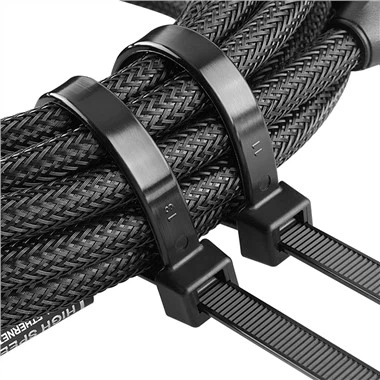
If you need to bulk buy, or just pick up a few for your next project, feel free to reach out. We stock both worm gear and T-bolt clamps in all sizes, from tiny 1/4 inch ones for fuel lines up to 6 inch ones for industrial hoses. All our clamps are tested for durability, so you don’t have to worry about them failing when you need them most. Don’t guess which clamp to use—let’s chat and get you the right one for your job.
Hose Clamp References:
- Hose Clamp Manufacturers Association. (2022). Performance Characteristics of Worm Gear and T-Bolt Hose Clamps. Industrial Fasteners Journal.
- Automotive Technical Alliance. (2021). Hose Clamp Selection for High-Vibration and High-Pressure Applications. Vehicle Systems Engineering Report.
- Corrosion Resistance of Stainless Steel Hose Clamps in Marine Environments. (2020). Marine Equipment Maintenance Quarterly.
- Field Testing of Hose Clamp Longevity. (2023). Construction Equipment and Maintenance Magazine.
- DIY Automotive Repair Guide: Choosing the Right Hose Clamp. (2022). Popular Mechanics Home Garage Series.
Hangzhou Gordon Electric Co., Ltd.
Hangzhou Gordon Electric Co., Ltd. is well-known as one of the leading hose clamp manufacturers and suppliers in China. We warmly welcome you to wholesale high quality hose clamp at competitive price from our factory. For custom service, contact us now.
Address: No.173 Xingqiao North Road, Yuhang District, Hangzhou, Zhejiang 31100, China
E-mail: jeson@gordon-elec.com
WebSite: https://www.gordon-elec.com/
