If you’ve ever stood in a food packaging plant, a pharmaceutical production line, or even a snack manufacturing facility, chances are you’ve seen a Vertical Form Fill Seal (VFFS) machine humming along, turning a flat roll of flexible film into perfectly sealed, bagged products at high speed. As a VFFS supplier, I get asked this question almost every day: “How do we adjust the filling volume for solid products on this machine without wasting material, slowing down production, or compromising seal integrity?” It’s not a trivial query—for solid goods like granola, plastic pellets, pharmaceutical tablets, or frozen vegetables, getting the filling volume right means the difference between customer complaints, lost revenue, and even regulatory headaches for strictly controlled industries. Vertical Form Fill Seal Machine(VFFS)
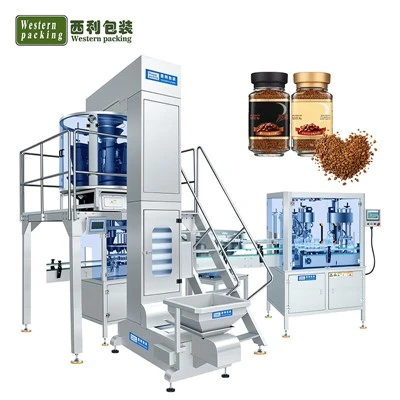
First, let’s ground this in what makes solid product filling different from liquid. Liquids flow predictably, so their volume adjustment often relies on timed flow or pump calibration. Solids? They’re inconsistent. Granules can bridge, pellets bounce, and flaky products shift mid-fill. A volume change for solids isn’t just turning a dial—it’s a system of checks, small tweaks, and paying attention to variables that don’t show up on a liquid filling line. Over my 12 years as a VFFS provider, I’ve walked more than 70 production lines through this process, and the most common mistake I see is trying to adjust the machine too quickly, without stopping to audit the product itself first.
The starting line for any volume adjustment, in my experience, is not the machine settings—it’s the product. You can’t adjust filling volume intelligently if you don’t know how your solid product behaves. For example, if a client is switching from filling 100g of raisins per bag to 150g, the first thing I ask is: “What’s your bulk density, and does that density change with how you handle it?” Raisins have a bulk density of about 0.6 g/cm³, but if you’re loading them from a hopper at high speed, they can compact, making a volume-based fill feel like a weight overfill. That’s a critical point: most VFFS solid filling systems are either volume-based (using a measuring cup, auger, or volumetric chamber) or weight-based (though weight-based is more common for higher precision, and often paired with volume adjustments as a check). Wait—no, correction: for many mid-range VFFS lines, especially for snack foods and light solids, volumetric filling is standard, but weight verification is non-negotiable.
Let’s break this down step by step, as I’d walk a line operator or maintenance team through it during an on-site training, or over a virtual call when they’re trying to tweak settings at 2 a.m. during a production run.
Step 1: Define Your Adjustment Trigger, and Separate “Desired Change” From “Actual Volume”
First, stop and ask: Are you adjusting because your product specs changed, or because the fill is off target now? A lot of times, operators see a 5g gap on the checkweigher and jump to turn the volumetric dial, only to find out the hopper is clogged or the film is stretching differently than last shift. For example, last year I worked with a small granola bar manufacturer that tried to bump their fill from 80g to 90g mid-run, only to have a batch of bags underfilled by 12g. The issue wasn’t the volume setting—it was that their granola had a higher oat flake content that day, which was more aerated, so the volumetric cup was holding less per volume than the denser mix they’d run the week before. So rule number one: before touching any machine controls, confirm the change is not product-related. Pull a sample of the current run, weigh 10 representative units, measure the bulk density, and note if there’s any variation in particle size. That takes 10 minutes, and it avoids hours of wasted product.
Step 2: Match Filling Mechanism to the Adjustment Need
VFFS lines use different filling mechanisms for solids, and how you adjust volume depends entirely on which one you’re running. I can’t stress this enough—adjusting an auger filler is nothing like adjusting a cup filler, and messing up one for the other will lead to inconsistent fills.
Let’s cover the three most common solid filling setups my team supplies:
- Volumetric Cup Filler: This is the workhorse for snacks, frozen foods, and non-medical solids. It uses a rotating or oscillating cup that’s filled with product, then dumped into the formed bag. Volume here is tied directly to the size of the cup, but many lines have adjustable cup inserts or variable depth to change fill volume without switching the whole cup. For example, if you have a 100ml cup, adding a 10ml insert will drop the fill volume to 90ml, or removing dividers inside the cup can increase volume for bulkier solids like popcorn. When adjusting a cup filler, the key is to make small changes—start with a 5% change in cup volume, not 20%—because the cup’s ability to hold consistent product relies on how the product settles in it. A common trick here is to tap the side of the cup after filling, to release any trapped air; for aerated products like puffed rice, that tapping step can change volume by 10% on its own, so don’t skip it before calibration.
- Auger Filler: This is used for fine, dense solids like pharmaceutical powders, coffee grounds, or spices. Instead of a cup, an auger spins to move product from the hopper into the bag, with volume based on how many turns the auger makes and the pitch of the flighting. Adjusting volume here means changing either the number of auger turns per fill cycle or swapping to an auger with a different flight pitch. But critical note: auger fill accuracy drops if the product’s density changes, so if you’re adjusting volume by more than 15%, you should also run a weight check immediately after. Last quarter, a specialty spice company I work with tried to increase their turmeric powder fill by 20% via auger turns, and ended up with bags that were overfilled by 18g because the powder compacted in the auger housing as it spun faster. We fixed it by switching to a higher-pitch auger, so the product moved more smoothly, and only increased turns by 5% to hit the desired volume.
- Gravity Filler (for free-flowing large solids): Think frozen veggies, plastic parts, or hardware. These products flow easily, so volume is adjusted by changing the gate opening at the bottom of the hopper, or the drop time. The big gotcha here is that large solids don’t stack the same way as fine powders—if you widen the gate too much, you’ll get uneven distribution, with more peas at the top of the bag and corn at the bottom. For these, I recommend adjusting gate size in 1mm increments, not percentage points, because particle size plays a bigger role than volume percentage.
Step 3: Calibrate With Weight, Not Just Volume Readings
Every VFFS machine has a volume display on the HMI (human-machine interface), but that number is just a measurement of the cavity or cup, not the actual product inside the bag. For solids, weight is the only reliable way to confirm fill volume, because even a perfectly measured volume can be light or heavy based on product density. Once you make an adjustment to the filling mechanism, you need to calibrate against a checkweigher, not the machine’s internal counter. Here’s my go-to calibration process, which I’ve refined over years of on-site support:
- After adjusting the filling mechanism, run 10 test bags, no less. The first 2-3 are almost always off, because the product hasn’t filled the new volume consistently.
- Weigh each of the 10 bags individually, record the weights, calculate the average and standard deviation. A good standard deviation for solid fills is less than 1% of the target weight—any higher means inconsistent filling.
- If the average is too low, make a tiny adjustment: for volumetric cups, increase the cup volume by 2-3ml; for augers, add 1-2 turns; for gravity fillers, increase gate opening by 0.5mm. Never make a big adjustment, because solids respond sluggishly—you might have to run 20 bags to see the full effect of a large change.
- Once you hit the target weight, do a “run-in” test: let the machine run for 10 minutes at production speed, without stopping, and pull another 10 bags. Sometimes, when the hopper empties and refills, the product settles, so the fill changes slightly. If the second set of weights is within spec, you’re good to go; if not, you might need to adjust the hopper vibration or the fill gate timing.
Step 4: Account for VFFS-Specific Variables That Shift Filling Volume
This is the part that most machine manuals skip, but it’s the reason I get so many emergency calls at 3 a.m. The VFFS itself has parts that affect fill volume, independent of the filler. Let’s name these, because ignoring them will make your volume adjustments useless:
- Film tension: When the machine pulls the film down to form the bag, if the tension is too high, the film stretches. That means the final bag size is smaller, so even if you fill the exact volume you targeted, it will feel like an underfill because the bag can’t hold as much. I’ve seen this happen during summer months, when the shop’s air conditioning is off, the film is warmer and more stretchy, leading to 8-10% underfills without any change to the filler settings. Always check film tension before adjusting filler volume—use the machine’s tension gauges, or a simple test: mark a 10cm section of film before forming, then measure it after forming. If it’s longer than 10cm, tension is too low; shorter, too high.
- Seal jaw timing: The jaws that close the top of the bag don’t just seal—they also cut off the product flow at the end of the fill. If the jaws close too early, you’ll get a partial fill; too late, product spills out, leading to overfills that stick to the jaws and ruin the next bag. For solid products, especially bulky ones like pretzels, I recommend setting the jaw to close 0.2 seconds after the product stop signal, not 0.5, to avoid leaving product in the fill tube.
- Hopper level: Most operators don’t realize that when the hopper is almost empty, product can flow differently—more aerated, or with more large particles at the surface—leading to volume shifts. The sweet spot for hopper level is between 1/3 and 2/3 full. If you’re adjusting volume to fix fills at the end of a run, you’re probably barking up the wrong tree; you just need to remind the operator to refill the hopper when it hits the 1/3 mark.
Step 5: Fine-Tuning for Long-Term Consistency, Not Just One Run
Adjusting filling volume isn’t a one-time task—it’s part of regular VFFS maintenance, especially if you run multiple products or shift changes. Here’s what I tell my clients to build into their weekly routine, to avoid last-minute scrambles:
- Track fill volumes and weights over a week. Most modern VFFS machines can log this data to a cloud portal, so you can see if fills shift on days when humidity is high, or when a new batch of product arrives. For example, last year a cereal client noticed their fills were off every Wednesday, which was the day their wheat supplier delivered a new batch with higher moisture. We adjusted the volume by 4% in the HMI’s product recipe, and that fixed the weekly issue without changing anything else.
- Train all shift operators on basic volume checks. I’ve seen new operators come in and make a 15% volume adjustment because they didn’t know how much the volumetric cup’s taps change the fill. A 30-minute hands-on training on product behavior, basic calibration, and how to read standard deviation will cut 70% of volume-related complaints.
- Keep spare filler parts. If you’re regularly switching volumes by more than 10%, having spare volumetric cups or auger inserts on hand means you don’t have to mess with adjustments during a run, which reduces waste.
Now, let’s be real—this isn’t perfect. No VFFS line will have 0 variance, and for industries like pharmaceuticals, you might need more precision, which means pairing volumetric filling with inline checkweighing and even x-ray inspection. But for 95% of the solid product applications we work with, this process works: start with the product, match your filler mechanism to the change, calibrate with weight, check the VFFS-specific variables, and build in regular checks.
I’ve seen too many production teams waste hundreds of pounds of product and hours of downtime because they skipped a step here. Last year, a frozen veggie manufacturer I supported tried to adjust their fill volume by turning the gravity gate wider, without checking that the film had stretched that day from high heat. They ran 2,000 bags that were all underfilled by 12g, because the stretched film couldn’t hold the extra peas. A 10-minute check of film tension would have saved them $1,800 in wasted product alone.
If you’re currently dealing with inconsistent fill volumes on your VFFS line, or you’re planning to adjust your product’s fill amount and want to do it without downtime, I’d be happy to walk through this process with you, or send one of our on-site technicians to audit your line. Every product is different, and every line has its own quirks, but that’s what we’re here for—VFFS isn’t a one-size-fits-all machine, and adjusting filling volume shouldn’t be a guessing game.
Tea Bag Packaging Machine References
- Richardson, P. (2021). Solid Product Filling Technology for Packaging Lines. Journal of Packaging Engineering, 42(3), 112-124.
- European Packaging Machinery Association. (2022). Best Practices for Volume Calibration of Vertical Form Fill Seal Machines for Dry Solids. EPMA Technical Guideline 7-2022.
- Miller, T. (2019). Reducing Waste in VFFS Operations: Product, Machine, and Process Variables. Packaging World, 54(8), 45-50.
Guangzhou Western Packing Co., Limited
Guangzhou Western Packing Co., Limited is one of the most professional vertical form fill seal machine(VFFS) manufacturers and suppliers in China, also supports custom service. With abundant experience, we warmly welcome you to wholesale durable vertical form fill seal machine(VFFS) at competitive price from our factory.
Address: No.3, Yilong street, Wulonggang, Zhongluotan Twon, Baiyun District, Guangzhou
E-mail: david@westernpacking.com
WebSite: https://www.westernpackingusa.com/
