As a long – standing supplier of metal nuts, I’ve encountered numerous inquiries regarding the differences between fine – thread and coarse – thread metal nuts. In this blog, I’ll delve into the details to help you understand these two types of nuts and make informed decisions for your projects. Metal Nut
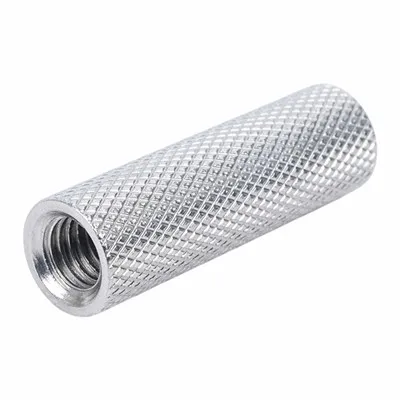
Physical Characteristics
The most obvious difference between fine – thread and coarse – thread metal nuts lies in their thread pitch. The thread pitch is the distance between adjacent threads. Coarse – thread nuts have a larger thread pitch, which means there are fewer threads per unit length. For example, in a standard inch – based system, a coarse – thread nut might have a pitch of 1/8 inch, while a fine – thread nut could have a pitch of 1/16 inch.
This difference in pitch results in different appearances. Coarse – thread nuts have a more rugged and visible thread pattern. The threads are wider and more spaced out, giving them a somewhat "chunky" look. On the other hand, fine – thread nuts have a more delicate and closely – spaced thread pattern. The threads are thinner and more numerous, presenting a more refined appearance.
Strength and Load – Bearing Capacity
When it comes to strength and load – bearing capacity, both fine – thread and coarse – thread nuts have their own advantages. Coarse – thread nuts are generally better at handling high – load applications. The larger thread pitch allows for more material between the threads, which means they can withstand greater shear and tensile forces. This makes them ideal for applications where heavy loads are involved, such as in construction, automotive engines, and large machinery.
For instance, in a construction project where steel beams need to be joined together, coarse – thread nuts are often used. The large threads can grip the bolts firmly, ensuring a secure connection even under significant stress. The wider threads also make it easier to engage the nut with the bolt, reducing the risk of cross – threading during installation.
Fine – thread nuts, however, offer a different kind of strength. Although they may not be able to handle as much load as coarse – thread nuts in terms of sheer force, they provide better resistance to loosening due to vibration. The smaller thread pitch allows for more contact points between the nut and the bolt, creating a tighter fit. This makes fine – thread nuts suitable for applications where vibration is a concern, such as in precision machinery, electronics, and some automotive components.
In a high – speed rotating machine, for example, fine – thread nuts can help keep the components in place by minimizing the effects of vibration. The increased number of threads also provides a greater frictional force, which helps to prevent the nut from backing off over time.
Installation and Removal
The installation and removal processes for fine – thread and coarse – thread nuts also differ. Coarse – thread nuts are generally quicker to install because of their larger thread pitch. You can turn the nut onto the bolt more rapidly, which can save time, especially in large – scale projects. Additionally, the wider threads are less likely to get damaged during installation, as they are more forgiving of minor misalignments.
However, removing a coarse – thread nut can be more challenging in some cases. If the nut has been tightened under high torque, the large threads can create a strong grip, making it difficult to loosen. Special tools may be required to apply enough force to turn the nut.
Fine – thread nuts, on the other hand, require more precise alignment during installation. The smaller thread pitch means that even a slight misalignment can cause cross – threading, which can damage the threads and make the nut difficult to install or remove. However, once properly installed, fine – thread nuts can be removed relatively easily, especially if they have not been overtightened. The increased number of threads provides more surface area for the application of force, allowing for a smoother removal process.
Cost Considerations
Cost is an important factor when choosing between fine – thread and coarse – thread metal nuts. Coarse – thread nuts are generally less expensive to produce. The manufacturing process for coarse – thread nuts is simpler and requires less precision, which reduces production costs. This makes them a more cost – effective option for large – scale projects where a large number of nuts are needed.
Fine – thread nuts, on the other hand, are more expensive. The manufacturing process for fine – thread nuts requires higher precision and more advanced machinery, which increases production costs. However, in applications where the benefits of fine – thread nuts, such as vibration resistance and precise fit, are crucial, the additional cost may be justified.
Applications
Coarse – thread nuts are commonly used in a wide range of industries. In the construction industry, they are used to connect structural components, such as steel beams and columns. In the automotive industry, coarse – thread nuts are used in engine blocks, suspension systems, and other high – load applications. They are also widely used in heavy machinery, such as cranes, bulldozers, and excavators.
Fine – thread nuts are often used in applications where precision and vibration resistance are important. In the electronics industry, they are used to secure circuit boards and other delicate components. In the aerospace industry, fine – thread nuts are used in aircraft engines and other critical components where a tight and secure connection is essential. They are also used in some high – end automotive applications, such as racing cars, where precision and reliability are paramount.
Conclusion
In summary, the differences between fine – thread and coarse – thread metal nuts are significant and should be carefully considered when choosing the right nut for your project. Coarse – thread nuts are better suited for high – load applications, are quicker to install, and are generally more cost – effective. Fine – thread nuts, on the other hand, offer better vibration resistance, a more precise fit, and are ideal for applications where precision is crucial.

As a metal nut supplier, I understand the importance of providing the right products for your specific needs. Whether you need coarse – thread nuts for a large – scale construction project or fine – thread nuts for a precision electronics application, I can offer a wide range of high – quality metal nuts.
Shaft If you’re interested in learning more about our metal nuts or would like to discuss your specific requirements, I encourage you to reach out to me. I’m here to help you make the best choice for your project and ensure that you get the highest – quality products at a competitive price.
References
- Machinery’s Handbook, 31st Edition
- ASME B1.1 – 2019, Unified Inch Screw Threads (UN and UNR Thread Form)
- ISO 68 – 1:1998, ISO general purpose screw threads — Basic profile — Part 1: Metric screw threads
Kunshan Haizhijie Precision Hardware Co., Ltd.
As one of the most professional metal nut manufacturers and suppliers in China, we’re featured by quality products and good price. Please rest assured to buy customized metal nut made in China here from our factory. Also, pricelist is available.
Address: No. 367, Kangzhuang Road, Zhou City Town, Kunshan City, Jiangsu Province, China
E-mail: wzhshui@sina.com
WebSite: https://www.hzhjmetal.com/
