As a supplier of labeling machines, I often encounter inquiries from potential customers about how to test the performance of these machines. It’s a crucial topic because a well – performing labeling machine can significantly enhance product marketing and production efficiency. In this blog, I will share some essential methods and considerations for testing the performance of a labeling machine. Labeling Machine

Accuracy Testing
One of the most critical aspects of a labeling machine’s performance is its accuracy. This can be measured in several ways.
Label Placement Precision
To test the label placement precision, prepare a set of test products with clearly marked target areas for label application. Set up the labeling machine according to the product specifications and run a series of consecutive labeling operations. After each label is applied, use a precision measuring tool, such as a caliper or a micrometer, to measure the deviation between the actual label position and the target position.
For example, in a product where the label should be centered within a 10 – millimeter margin on both sides, if the measured deviation on average is within 1 millimeter, it indicates a high – level of accuracy. A deviation of more than 2 millimeters may suggest that the machine needs adjustment or calibration.
Label Size and Shape Consistency
Ensure that the labels produced and applied by the machine match the expected size and shape. Cut a sample of the original label design and compare it with the labels applied on the test products. Use a ruler or a measuring grid to check the length, width, and any specific geometric features of the label.
Any visible distortion, stretching, or shrinking of the label can affect the product’s aesthetic appeal and identification. If the label size deviates by more than 1% from the original design, it may cause issues during product presentation or barcode scanning, which will be discussed later.
Speed and Throughput Testing
The speed and throughput of a labeling machine determine how many products can be labeled within a given time frame, which is essential for meeting production demands.
Continuous Operation Test
Set up the labeling machine to run continuously for a specific period, say one hour. During this time, accurately count the number of products that are successfully labeled. Divide the total number of labeled products by the operating time (in minutes) to calculate the labeling speed in products per minute.
Compare this speed with the machine’s specified speed. If the actual speed is significantly lower, it could be due to mechanical issues, such as a clogged feed mechanism or a slow – moving labeling head.
Peak Throughput Estimation
Conduct a short – burst test to estimate the machine’s peak throughput. Operate the machine at its maximum speed setting for 15 minutes while closely monitoring for any errors or breakdowns. Count the number of products labeled during this period and calculate the peak throughput.
However, it’s important to note that running the machine at peak throughput continuously may not be sustainable in the long term and can lead to increased wear and tear.
Adhesion and Durability Testing
The adhesion and durability of the labels are vital to ensure that the labels stay in place throughout the product’s lifecycle.
Peel – Strength Test
Use a peel – strength tester to measure the force required to peel the label from the product surface. Select a representative sample of labeled products and attach the tester to the edge of the label. Slowly pull the label at a 180 – degree angle at a constant speed.
The peel – strength value should be within the acceptable range specified for the product. If the peel – strength is too low, the label may fall off during handling or storage. If it is too high, it may damage the product when the label is removed.
Environmental Resistance Test
Expose the labeled products to different environmental conditions, such as high humidity, extreme temperatures, and sunlight. Place the samples in a humidity chamber at a relative humidity of 80% for 24 hours and then check for any signs of label lifting or peeling.
Similarly, subject the products to a temperature chamber set at – 20°C and 50°C for several hours and observe the label’s condition. In a sunlight resistance test, place the labeled products under a UV light source for a specified period to simulate long – term sunlight exposure.
Barcode and QR Code Scanning Test
For products with barcodes or QR codes on the labels, it’s essential to ensure that these codes can be accurately scanned.
Scanner Compatibility Test
Use different types of barcode scanners, including handheld scanners and fixed – mount scanners, to scan the barcodes on the labeled products. Ensure that the scanning devices are set to the correct barcode format (e.g., Code 128, EAN – 13).
If any of the scanners fail to read the barcode, it could be due to issues such as poor print quality, incorrect barcode dimensions, or improper label placement that affects the scanner’s visibility.
Decode Rate Test
Scan a large number of barcodes (at least 100) to calculate the decode rate. The decode rate is the percentage of barcodes that are successfully scanned and decoded. A high – quality labeling machine should produce barcodes with a decode rate of at least 99%.
Ease of Use and Maintenance Testing
The usability and maintainability of the labeling machine are also important factors in its overall performance.
Operator Training Assessment
Provide a basic training session to new operators on how to set up, operate, and troubleshoot the labeling machine. After the training, observe the operators as they perform simple tasks, such as loading labels, adjusting settings, and running a test labeling operation.
If the operators face significant difficulties or require a long time to master these basic tasks, it may indicate that the machine’s user interface needs improvement.
Maintenance Accessibility
Inspect the labeling machine to assess the ease of maintenance. Check if the key components, such as the labeling head, conveyor belts, and rollers, can be easily accessed for cleaning, lubrication, and part replacement.
A machine with good maintenance accessibility can reduce downtime and maintenance costs in the long run.
Noise and Vibration Testing
Excessive noise and vibration can not only be a nuisance but also indicate potential mechanical problems in the labeling machine.
Noise Level Measurement
Use a sound level meter to measure the noise level of the labeling machine during operation. Place the meter at a distance of 1 meter from the machine and at ear – level. The noise level should be within the acceptable range specified by industry standards, typically below 80 decibels.
Vibration Analysis
Use a vibration sensor to detect and analyze the vibration of the machine’s key components. Excessive vibration can cause misalignment of parts, which may lead to inaccurate label placement and reduced machine lifespan.
In conclusion, testing the performance of a labeling machine is a comprehensive process that involves multiple aspects, from accuracy and speed to adhesion and usability. By conducting these tests thoroughly, you can ensure that the labeling machine meets your production requirements and provides high – quality labeling results.
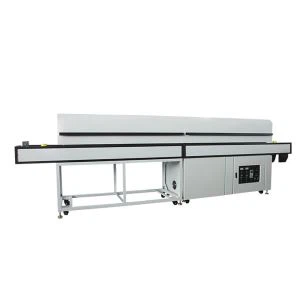
If you are in the market for a reliable labeling machine and want to learn more about our products, we invite you to contact us for a detailed consultation. Our team of experts is ready to assist you in selecting the most suitable labeling solution for your business needs.
Exposing Machine References
- "Handbook of Labeling Technology" by Klaus – Peter Jäckel
- "Automated Labeling Systems: Principles and Applications" by John Smith
Shenzhen Hejia Automatic Printing Machine Co., Ltd.
Shenzhen Hejia Automatic Printing Machine Co., Ltd. is one of the most professional labeling machine manufacturers and suppliers in China. All products for sale come in high precision and reliable performance. If you’re interested in it, welcome to place orders for labeling machine from our factory. Good prices and services are offered in our factory.
Address: No.3 Building, Daerxun Technology Ind. Zone, No.29 Pingxin North Road, Pinghu Town, Longgang, Shenzhen City, China
E-mail: info@apm-print.com
WebSite: https://www.apm-print.com/
