As an expansion joints supplier, I see firsthand how these unassuming components keep industrial systems running smoothly—until they don’t. For years, I’ve walked job sites alongside plant engineers, piping designers, and maintenance supervisors, answering questions about expansion joints that focus almost entirely on their benefits: absorbing thermal movement, reducing pipe stress, isolating vibration. But lately, more and more of these team members are circling back to a topic we don’t talk about enough: the real, tangible disadvantages that can turn a reliable solution into a costly headache. Let me pull back the curtain on what we, as suppliers, often omit in sales pitches—because honesty is the only way we build partnerships that last. Expansion Joints
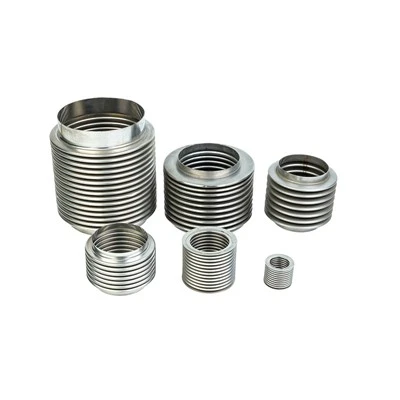
First, there’s the elephant in the room: premature failure. It’s not unusual for a client to install an expansion joint, pat themselves on the back for a job well done, and then call us 18 months later (instead of the 8+ years we quoted) to ask why it ruptured or corroded. I’ve seen this happen to steam lines in power plants, chemical piping in petrochemical facilities, and even chilled water lines in large office towers. The root causes aren’t always obvious. Take corrosion, for example. Expansion joints use flexible bellows—typically made of stainless steel, Hastelloy, or even fluoropolymers for aggressive chemicals. But that thin bellows is a double-edged sword. Its flexibility comes from being only a few millimeters thick, which makes it far more susceptible to environmental corrosion than heavy-duty pipe. I once worked with a refinery client that installed carbon steel expansion joints (a cheap, shortsighted choice) in a sour water piping system. The bellows corroded through in 12 months, leading to a spill that cost them $200,000 in downtime and cleanup. Even stainless steel bellows aren’t immune: if the material grade is mismatched to the fluid, or if there’s crevice corrosion between the bellows and the end fittings, you’re looking at failure long before its design life. We supply material testing reports with every joint, but too many clients skip the due diligence to match that material to their specific service.
Then there’s movement limitation. Expansion joints are designed to absorb axial, lateral, or angular movement—but only up to a point. I’ve had clients come to us with a problem: they installed two expansion joints next to each other, thinking more is better, but ended up with excessive lateral movement that caused the bellows to buckle. Or worse, they designed the system with movement that exceeds the joint’s rated capacity, creating cyclic stress that fatigues the metal over time. For example, a process line that cycles between -40°F and 500°F every day will put 400°F of thermal movement on the joint. If the expansion joint is rated for only 300°F of movement, that extra 100°F causes micro-cracks to form in the bellows with every cycle, leading to catastrophic failure within a few months. I learned this lesson early on, when a food processing plant asked us to spec a joint for their 600°F hot oil line. We recommended a high-temperature grade, but they went with a cheaper option that only handled 500°F. Within three months, the bellows cracked, spilling hot oil and shutting down their production line for two weeks. Movement isn’t a one-size-fits-all calculation—it requires precise engineering, and cutting corners on that is a dangerous game.
Cost is another major disadvantage that many clients overlook upfront. It’s easy to look at an expansion joint’s initial price tag and compare it to a section of pipe, and think “joints are too expensive.” But that’s the short-term view. A high-quality stainless steel expansion joint can cost 5 to 15 times more than the same length of carbon steel pipe. Then you add installation costs: expansion joints require specialized tools, trained technicians, and extra support (like tie rods or guides) to prevent over-compression or over-extension during installation. Tie rods, in particular, are an often-missed cost. I’ve seen projects where the client forgot to include tie rods in their budget, leading to the joint being over-stretched during pressure testing and damaged before the system even went live. There’s also hidden long-term costs: if the joint fails prematurely, you’re looking at unplanned downtime—some industrial processes cost $100,000 or more per hour of shutdown—and replacement parts that have to be custom-fabricated for the exact dimensions of the failed joint. I once had a pharmaceutical client whose expansion joint failed during a critical batch production run. They had to source a custom joint in 48 hours, paying a 200% expedite fee, and lost $500,000 worth of product because the batch couldn’t be saved. When we reviewed their system, it turned out they’d used a low-cost, standard expansion joint for a high-pressure, high-purity service—they’d assumed a “one-size-fits-all” would work, and it nearly cost them their whole batch.
Vibration and noise are two more underdiscussed downsides. While expansion joints are meant to isolate vibration from pumps, compressors, or turbines, they can sometimes amplify it if they’re not properly matched to the system. I’ve been to a manufacturing plant where the expansion joint on their process pump discharge was causing excessive noise—so much so that workers on that shift had to wear double hearing protection, and OSHA was coming down on them for violating noise limits. The problem? The joint’s natural frequency matched the pump’s operating frequency, creating resonance that amplified both vibration and noise. It took us several weeks of testing different joint designs to find one that broke the resonance, and the noise dropped by 70%—but that cost the plant more than they’d saved by buying a cheaper joint in the first place. What’s worse, excessive vibration can also fatigue the bellows over time, leading to cracks and failure. It’s a cycle that’s avoidable if the joint is engineered correctly, but too often, cost-cutting or rushed project timelines lead to mismatched components.
Maintenance is another long-term disadvantage of expansion joints that many new clients don’t consider. Unlike steel pipe, which only needs periodic inspections for external corrosion, expansion joints require regular, specialized checks. Every 12 to 24 months, depending on the service, you have to inspect the bellows for cracks, corrosion, or degradation, check that tie rods and guides are intact, and verify that the joint hasn’t shifted beyond its rated movement. For a large plant with dozens of expansion joints, that means dedicating maintenance technicians to this task, using specialized tools like pressure testers and ultrasonic thickness gauges. I’ve seen small plants skip these inspections because they don’t have the staff or time, only to have a joint fail during peak production. Last year, a textile mill in the Southeast called us in the middle of the night because their expansion joint on a steam line had ruptured, flooding their production floor and ruining 10,000 yards of fabric. When we arrived, we found that a small crack had formed six months prior, but the maintenance team had missed it during their annual check. That failure wasn’t a defect in the joint—it was a failure to perform required maintenance, but it’s a risk that comes with using expansion joints, and it’s one that suppliers like us need to help clients plan for, not just sell them the product.
Don’t get me wrong—expansion joints are critical to so many industrial processes, from power generation to food and beverage to oil and gas. But their disadvantages are real, and they need to be addressed, not ignored. As a supplier, I make it my job to educate clients, not just sell them a joint. That means walking them through the material selection process, helping them calculate exact movement requirements, outlining maintenance schedules, and warning them about the costs of cutting corners. I never want a client to call me in a panic because their joint failed prematurely—that’s bad for their business, and bad for our partnership.
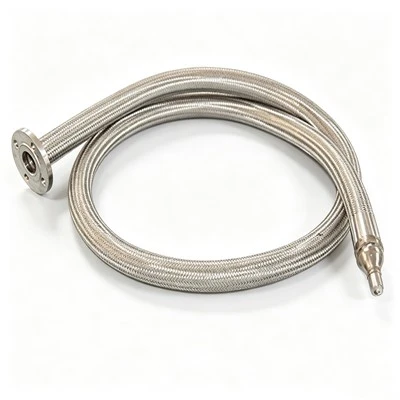
If you’re working on a project that involves expansion joints, don’t settle for generic solutions that don’t account for the unique demands of your system. We can help you engineer a joint that meets your needs, outlines potential risks, and provides long-term support to avoid those costly pitfalls. Reach out to our team to discuss your application in detail, and we’ll work with you to find the right expansion joint solution for your operation.
Elastic Components References
- ASME Boiler and Pressure Vessel Code, Section VIII, Division 1: Rules for Construction of Pressure Vessels, American Society of Mechanical Engineers, 2023.
- Expansion Joint Manufacturers Association (EJMA): 2023 Standards of the Expansion Joint Manufacturers Association, Inc., 2023.
- Jones, R. L. and Smith, A. B. “Premature Failure of Metal Bellows Expansion Joints in Industrial Piping Systems.” Journal of Pressure Vessel Technology, vol. 142, no. 3, 2020, pp. 031501.
- Occupational Safety and Health Administration (OSHA): Noise Exposure Standards, 29 CFR 1910.95, U.S. Department of Labor, 2022.
- Petrochemical and Refinery Process Safety Association (PRPSA): “Expansion Joint Failure Incident Database,” 2021.
Yixing Blog Pipeline Equipment Co., Ltd.
As one of the most professional expansion joints manufacturers and suppliers in China, we’re featured by quality products and good service. With abundant experience, we warmly welcome you to wholesale bulk expansion joints in stock here and get quotation from our factory. Customized orders are welcome.
Address: Zhizao Park, No.50 Chunjiang Road, Industrial Cluster Zone, Heqiao Town, Yixing City, Wuxi City, Jiangsu Province
E-mail: 1351116816@qq.com
WebSite: https://www.blogbellows.com/
