If you’re like the engineers and procurement managers I work with every day, you’ve probably spent hours poring over datasheets, benchmark reports, and client specs for Transformers—whether for power distribution, industrial machinery, renewable energy systems, or commercial building projects. As a Transformer supplier with over two decades of field experience, I’ve seen too many projects go off the rails because teams evaluated a Transformer on just one or two metrics, only to run into hidden issues later: unplanned outages, excessive energy bills, or components that failed years before their rated lifespan. Evaluating a Transformer’s performance isn’t a one-and-done exercise; it’s a layered, data-driven process that combines technical testing, real-world operational data, and long-term reliability checks. In this post, I’ll break down exactly how we work with our clients to evaluate Transformers—not just to pick the best unit for their needs, but to set it up for decades of consistent, safe performance. Transformer

Start with Core Electrical Performance: The Non-Negotiable Basics
First, we never skip the foundational electrical metrics that define a Transformer’s core function: stepping voltage up or down efficiently and safely. But it’s not just about matching the rated kVA (kilovolt-ampere) or voltage ratios to your load. For us, that starts with no-load loss and load loss—two numbers that make or break operational costs over a Transformer’s lifespan. No-load loss, also called core loss, is the tiny amount of energy wasted as heat when the Transformer is connected to the grid but not carrying any load. Load loss, by contrast, is the heat generated by current flowing through the windings, which is proportional to the square of the load.
I learned this the hard way early in my career. We sold a 2,000 kVA Transformer to a manufacturing plant that prioritized upfront cost over loss efficiency. Six months later, their operations manager called us complaining their monthly electricity bill had jumped by $1,200—all because that Transformer had 30% higher no-load loss than a premium efficiency unit. When we recalculated, it turned out that plant’s Transformer was drawing power 24/7, even during off-shift periods, so the extra core loss added up fast. That’s why we always walk clients through a simple payback calculation: the difference between standard and premium efficiency units usually pays for itself in 3 to 5 years, depending on load hours and energy costs.
Next, we check impedance voltage (or percent impedance), a critical metric for fault protection. Impedance is the Transformer’s internal resistance to short-circuit currents, which determines how much fault current will flow during an outage. Too low impedance means fault currents can spike high enough to damage windings, circuit breakers, or connected equipment. Too high impedance, and voltage drops too much during start-up (think large motors) or peak load events, causing equipment to underperform. We compare a unit’s published impedance to industry standards (like ANSI or IEC) and test it in our in-house lab to confirm—because some cut-rate suppliers inflate their published impedance numbers to look better, only to deliver units that don’t meet specs once installed.
Go Beyond the Lab: Physical and Construction Quality That Drives Long-Term Performance
Electrical specs are essential, but a Transformer is only as good as its build quality. We’ve seen high-efficiency electrical units fail in 10 years because of poor insulation or flimsy tank construction, while a slightly less efficient unit lasted 40 years thanks to robust build. That’s why our evaluation process includes a deep dive into physical components, most notably insulation system quality.
Insulation is the unsung hero of a Transformer: it separates windings from each other and from the grounded core, preventing short circuits. The two main types are mineral-oil-based insulation (most common in medium-to-high voltage units) and dry-type insulation (for low-voltage, indoor applications). For oil-filled units, we test the insulation paper’s degree of polymerization (DP value) to check for thermal aging. A DP value above 500 means the paper is in good condition, while anything below 250 signals advanced aging—even if the unit is still within its rated lifespan. For dry-type units, we verify the insulation’s temperature class (Class F for 155°C, Class H for 180°C, etc.) and test its partial discharge (PD) level, which measures tiny electrical leaks in the insulation. High partial discharge can erode insulation over time, leading to sudden failure long before the unit is expected to be replaced.
Tank and cooling system design are also make-or-break. The tank isn’t just a container—it’s a structural component that holds oil and dissipates heat. We check for corrosion resistance, especially in outdoor units exposed to salt air (coastal projects) or industrial pollutants. For cooling, we evaluate the Transformer’s ability to dissipate heat under peak loads, extreme ambient temperatures, and even fault conditions. For example, a Transformer rated for 40°C ambient might struggle in a desert climate where temperatures regularly hit 50°C. We also inspect cooling fans, radiators, and oil pumps for reliability—cheap fans that burn out every 2 years are a hidden cost that adds up over time.
Operational Performance: Real-World Testing and Long-Term Reliability Metrics
A Transformer’s performance in the lab doesn’t always match what it does in the field. That’s why we work with clients to collect operational data post-installation, but also to test units under simulated real-world conditions before they go live. For new installations, we recommend a factory acceptance test (FAT) and site acceptance test (SAT) as standard practice. During the FAT, we run a series of full-load tests in our lab to measure temperature rise, check for voltage regulation, and verify loss levels. The SAT, done on-site before commissioning, includes testing winding resistance, insulation resistance, and tap changer operation to make sure nothing shifted during shipping and installation.
But the most telling part of performance evaluation comes from long-term operational data. For our clients, we help set up basic monitoring (even simple thermal sensors and power meters) to track key metrics over the first 12 to 24 months: load factor, hot-spot temperature, oil quality (for oil-filled units), and partial discharge levels. A load factor of 70-80% is ideal for long life—running a Transformer at 100%+ load 24/7 accelerates aging, while running it at 30% load or lower for years can also cause issues from underutilization and poor heat circulation. Hot-spot temperature is another critical number: most Transformer insulation is designed to handle a top hot-spot temperature of 110°C (for Class F insulation). If that number regularly exceeds 120°C, the insulation’s lifespan is cut in half for every 8°C increase above the rated limit—this is known as the Arrhenius equation, the same formula we use to calculate insulation aging rates.
We also factor in environmental exposure when evaluating performance. For coastal installations, we check for corrosion protection on all metal parts—galvanized coatings, stainless steel fittings, or specialized paint systems that prevent rust from salt spray. For industrial facilities near chemical plants or mining operations, we test the Transformer’s ability to withstand ambient pollutants that can break down insulation or corrode windings. In renewable energy projects, like wind farms or solar plants, Transformers are often installed in remote locations with harsh weather—extreme cold, heavy rain, or high winds—so we evaluate their mechanical robustness (like bracing for short-circuit forces) and weather sealing to avoid downtime from environmental damage.
Total Cost of Ownership (TCO): The Hidden Metric No Supplier Wants to Talk About
At the end of the day, all the technical specs and test results boil down to one thing: the total cost of owning the Transformer over its lifespan, not just the initial purchase price. I’ve seen procurement teams get a great deal on a cheap Transformer, only to spend 3 times that amount on repairs, replacements, and extra energy costs over 20 years. Our evaluation process includes a TCO analysis that factors in upfront cost, energy loss costs, maintenance costs, and the Transformer’s expected lifespan.
For example, let’s compare two 1,500 kVA oil-filled Transformers for a commercial building: Unit A costs $18,000, has a no-load loss of 1.2 kW and load loss of 12 kW, and a rated lifespan of 25 years. Unit B costs $22,000, has a no-load loss of 0.8 kW and load loss of 9 kW, and a rated lifespan of 40 years. Using average U.S. industrial electricity rates of $0.10 per kWh, running the Transformer 8,760 hours a year: Unit A’s annual energy cost is ($1.2 kW + (12 kW * 0.7 load factor)) * 8,760 hours * $0.10 = ~$9,060. Unit B’s annual energy cost is ($0.8 kW + (9 kW * 0.7)) * 8,760 * $0.10 = ~$6,060. Over 25 years, Unit A’s total energy cost is $226,500, plus upfront cost of $18,000, for a total of $244,500. Unit B’s total energy cost over 25 years is $151,500, plus upfront cost of $22,000, for a total of $173,500. And Unit B would last another 15 years beyond that, with no extra purchase cost. That’s the kind of TCO analysis that changes how clients evaluate Transformer performance, way beyond the spec sheet.
Common Pitfalls to Avoid in Transformer Performance Evaluation
After 20 years in this business, I’ve seen the same mistakes made over and over again. The biggest is focusing only on kVA rating and upfront cost, ignoring losses and build quality. Another mistake is skipping testing: a supplier might send a unit that looks great on paper, but has hidden defects like misaligned windings or poor insulation that only show up when tested. I also see clients overlook site-specific conditions: a Transformer that works perfectly in a mild climate might overheat in a hot desert, or corrode quickly in a coastal area, because the supplier didn’t account for the local environment during evaluation.
Ready to Evaluate Your Transformer Needs?
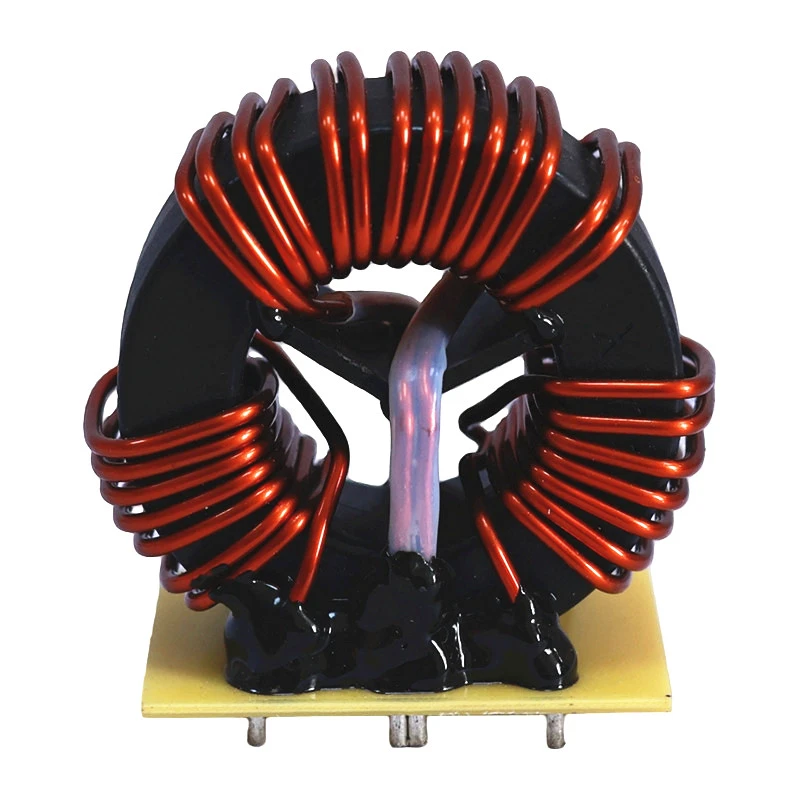
Whether you’re replacing an old unit, upgrading a system, or building a new project, evaluating Transformer performance requires a partner that’s invested in your long-term success, not just a one-time sale. We work with clients across industries—industrial manufacturing, commercial real estate, renewable energy, data centers, and more—to tailor our evaluation process to their specific needs, combining electrical testing, build quality checks, operational data analysis, and TCO modeling. We don’t just sell Transformers; we help you pick the one that will deliver consistent, efficient performance for decades, and avoid the costly surprises that come with cutting corners.
Isolation Transformer If you’re ready to assess your current Transformer’s performance or find a new unit that fits your project’s needs, get in touch with our team to start a conversation. We’ll walk you through every step, no jargon, no hidden fees, just the data you need to make the right choice.
References
- ANSI/IEEE C57.12.00, Standard General Requirements for Liquid-Immersed Distribution, Power, and Regulating Transformers
- IEC 60076-1, Power Transformers – Part 1: General Requirements
- “Transformer Losses and Their Impact on Total Cost of Ownership,” Electric Power Research Institute (EPRI)
- “Insulation Aging in Power Transformers: The Role of Thermal Stress,” IEEE Transactions on Power Delivery, Vol. 25, No. 4, October 2010
Dongguan Hensiron Electric Co., Ltd.
As one of the most professional transformer suppliers in China, we have world-leading production equipment and strong manufacturing capabilities. Please feel free to buy high quality transformer made in China here from our factory. Customized orders are welcome.
Address: Building 4, Xinxing Industrial Zone, Wangao Road, Wanjiang Street, Dongguan City, China
E-mail: jessica@dghensiron.com
WebSite: https://www.dghensiron.com/
