In the era of rapid globalization, the seamless flow of information across the globe has become a cornerstone of modern society. This phenomenon is largely attributed to the advancement of communication technologies, among which telecommunication towers play an irreplaceable role. As a supplier of telecommunication towers, I have witnessed firsthand how these structures contribute to the globalization of communication. In this blog, I will delve into the various aspects of how telecommunication towers facilitate global communication and why they are essential in our interconnected world. Telecommunication Tower

The Infrastructure Foundation for Global Connectivity
Telecommunication towers serve as the backbone of modern communication networks. They are the physical structures that support a wide range of communication equipment, including antennas, transmitters, and receivers. These devices are responsible for sending and receiving signals, which are the carriers of information such as voice calls, text messages, and data.
One of the primary functions of telecommunication towers is to extend the reach of communication signals over long distances. In a world where geographical boundaries are no longer barriers to communication, these towers help bridge the gap between different regions. For instance, in rural or remote areas where laying fiber – optic cables may be challenging due to geographical obstacles or high costs, telecommunication towers can provide wireless communication services. This allows people in these areas to connect with the rest of the world, whether it’s for business, education, or social interaction.
Moreover, telecommunication towers are crucial for international communication. They support satellite communication systems that enable global coverage. For example, satellite – linked telecommunication towers can relay signals across continents, facilitating international phone calls, video conferencing, and global data transfer. This is essential for multinational corporations, which rely on real – time communication between their branches in different countries to coordinate operations, share information, and conduct business transactions.
Enabling Mobile Communication and the Internet of Things (IoT)
The rise of mobile devices has revolutionized the way we communicate. Smartphones, tablets, and other mobile gadgets have become ubiquitous, and people expect to stay connected anywhere, anytime. Telecommunication towers are at the heart of this mobile communication revolution.
They provide the necessary network coverage for mobile devices. As mobile users move around, they need a seamless transition between different signal sources. Telecommunication towers are strategically placed to ensure continuous coverage, allowing users to maintain their connections while on the move. This is particularly important in a global context, as travelers, businesspeople, and tourists need to stay connected regardless of their location.
In addition to traditional mobile communication, telecommunication towers also support the growth of the Internet of Things (IoT). The IoT refers to the network of physical devices, vehicles, home appliances, and other items embedded with sensors, software, and connectivity, which enables these objects to connect and exchange data. Telecommunication towers provide the communication infrastructure for these IoT devices. For example, in a smart city project, thousands of sensors installed in traffic lights, environmental monitoring stations, and public utilities rely on the signals from telecommunication towers to transmit data to a central server for analysis. This not only improves the efficiency of city management but also enhances the quality of life for residents. On a global scale, the IoT is enabling new business models and applications in various industries, from healthcare to manufacturing, and telecommunication towers are making it all possible.
Facilitating Global Media and Content Distribution
Telecommunication towers play a significant role in the global distribution of media and content. In today’s digital age, media consumption has shifted from traditional forms to digital platforms. Streaming services, social media, and online news portals have become the primary sources of information and entertainment for people around the world.
These digital media platforms rely on high – speed and reliable communication networks, which are supported by telecommunication towers. For example, when you stream a high – definition movie on a global streaming platform, the video data needs to be transmitted from the server to your device. Telecommunication towers, along with other network components, ensure the smooth and uninterrupted delivery of this data. This is crucial for the global media industry, as it allows content creators and distributors to reach a global audience.
Social media platforms also depend on telecommunication towers to function effectively. With billions of users worldwide, social media has become a platform for global communication, where people can share ideas, experiences, and information instantaneously. Telecommunication towers enable these platforms to handle the massive amount of data traffic generated by user interactions, such as posts, comments, and likes. This not only strengthens social connections across the globe but also promotes cultural exchange and understanding.
Promoting Economic Globalization
The globalization of communication facilitated by telecommunication towers has had a profound impact on the global economy. It has opened up new markets and opportunities for businesses of all sizes.
Small and medium – sized enterprises (SMEs) can now reach a global customer base through online platforms. Telecommunication towers ensure that these businesses can connect with customers around the world, promoting cross – border trade and e – commerce. For example, an artisan in a small town can sell their handmade products to customers in different countries through an online store, thanks to the reliable communication network supported by telecommunication towers.
In addition, the global supply chain has become more efficient and integrated due to improved communication. Companies can now coordinate their production, procurement, and distribution processes across different countries in real – time. Telecommunication towers enable seamless communication between suppliers, manufacturers, and distributors, reducing delays and costs. This has led to the growth of global manufacturing and trade, as companies can take advantage of cost – effective resources and markets in different regions.
Furthermore, the development of the digital economy, which includes sectors such as fintech, e – learning, and digital marketing, is heavily reliant on telecommunication towers. These sectors are driving economic growth and creating new jobs around the world. For instance, fintech companies can offer financial services to customers globally, and e – learning platforms can provide educational resources to students in remote areas, all made possible by the communication infrastructure provided by telecommunication towers.
The Future of Telecommunication Towers in Global Communication
As technology continues to evolve, the role of telecommunication towers in global communication is only going to become more important. The advent of 5G technology, for example, promises even faster data speeds, lower latency, and greater connectivity. Telecommunication towers will need to be upgraded to support 5G networks, which will enable new applications such as autonomous vehicles, smart factories, and augmented reality.
In addition, the demand for communication services is expected to grow exponentially in the coming years, especially in emerging economies. Telecommunication towers will play a crucial role in meeting this demand, providing access to communication and information for millions of people who are currently underserved.
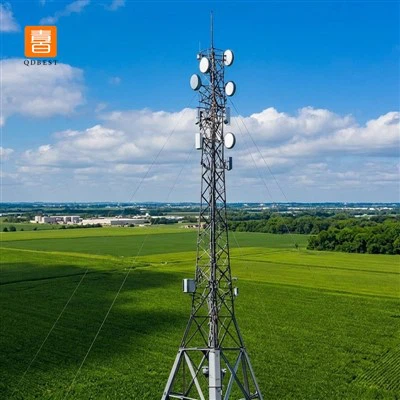
As a supplier of telecommunication towers, we are committed to providing high – quality products and solutions to meet the evolving needs of the global communication industry. Our towers are designed to be robust, reliable, and environmentally friendly, ensuring optimal performance in different geographical and climatic conditions. We also offer comprehensive installation, maintenance, and support services to ensure the seamless operation of our customers’ communication networks.
The Monopole Tower If you are in the telecommunication industry and looking for a reliable partner for your tower needs, we would love to hear from you. Whether you are building a new network, upgrading an existing one, or expanding your coverage, our team of experts can provide you with customized solutions that meet your specific requirements. Contact us to start a discussion about your telecommunication tower procurement and let’s work together to contribute to the further globalization of communication.
References
- "Telecommunications Infrastructure and Economic Development" by World Bank
- "The Internet of Things: A New Paradigm for Global Connectivity" in IEEE Communications Magazine
- "5G Technology and Its Impact on Future Communication Networks" in Journal of Telecommunications Technology
Qingdao BEST Steel Structure Co., Ltd.
Qingdao BEST Steel Structure Co., Ltd. is one of the most professional telecommunication tower manufacturers and suppliers in China. We warmly welcome you to buy customized telecommunication tower made in China here from our factory. If you have any enquiry about OEM service, please feel free to email us.
Address: Jiaobei Industrial Park, Qingdao, China
E-mail: sales@qdbsstower.com
WebSite: https://www.qdbsstower.com/
