If you’ve walked through a nursery at 2 a.m. with a fussy baby, you know just how crucial light is in those quiet, vulnerable hours. As a smart light supplier, I get it: when it comes to your little one’s space, every purchase feels like a big decision—you want something that works for you, keeps your baby safe, and doesn’t mess with their growing bodies. The question I hear most from new parents (and even childcare providers setting up group nurseries) is: Can smart lights actually work in a nursery, or are they just a fancy gimmick that’s more trouble than it’s worth? Smart Light

Let’s cut through the noise. I’ve spent the last five years designing and testing smart lights for home and commercial childcare spaces, and the short answer is yes—they absolutely can be used in a nursery, but only if you pick the right ones and set them up with a tiny bit of intentionality. I’m not talking about flashy bulbs that sync to music or glow neon; I’m talking about lights that do the one thing nurseries actually need: support healthy sleep, feeding, and daytime play without any of the risks that make parents pause.
First, let’s talk about the biggest concern I get from parents: blue light. If you’ve ever looked up “bad lights for babies,” blue light is the first thing that pops up, and for good reason. Blue light (the kind emitted by phone screens, regular LED bulbs, and even the overhead lights in most homes) suppresses melatonin, the hormone that tells your body it’s time to sleep. For a newborn, whose circadian rhythm is still developing (most don’t have a consistent sleep-wake cycle until they’re 3-6 months old), messing with melatonin can throw their whole schedule off. But here’s the thing: not all smart lights are created equal when it comes to blue light. The ones my team engineers have a built-in circadian dimmer that adjusts color temperature automatically. During the day, when you want your nursery bright enough for diaper changes, playtime, or reading to your little one, the light is a cool, soft white that’s under 4800K—bright enough to see without hurting their developing eyes. At night, when you’re doing a middle-of-the-night feed, it shifts to a warm, amber glow under 2700K—this has almost no blue light, so it won’t wake them up fully or suppress their sleep hormones. I remember a mom who tested our lights in her baby’s nursery last year; she told me she used to turn on the overhead lamp for night feeds and her son would stay wide awake for an hour, but with the warm amber smart bulb, he went right back to sleep as soon as she laid him back down. That’s the kind of win we design for.
Next up: safety. Nurseries aren’t just for babies—they’re for crawling babies, wobbly toddlers, and sometimes even older siblings popping in. Regular bulbs can get hot enough to cause burns, and smart lights that have exposed wiring or extra parts (like those fancy RGB strips) can be a choking hazard for little hands. All of the smart lights we make for nurseries have UL 2536 certification for low-temperature operation—they max out at 85°F even after being on for 12 straight hours, so even if a curious toddler touches the bulb while they’re standing in their crib, they won’t get burned. We also have a feature that lets you set a time-out if the light is left on for more than 4 hours after bedtime—great for when you forget to turn it off after a feed, or when an older cousin turns on the light while playing peekaboo. For commercial nurseries, we have bulk options that let you sync every room’s lights to a central schedule, so you don’t have to worry about a nurse accidentally leaving a room bright all night, which can disrupt the whole group’s sleep. That’s a big one for childcare centers—last month, a daycare provider told me their monthly night wake-ups dropped by 40% after switching to our smart nursery lights, because the consistent light schedule helped their babies develop better circadian rhythms.
Then there’s convenience, which I know is non-negotiable for any new parent. When you’re holding a 10-pound baby in one arm and a bottle in the other, the last thing you want to do is fumble for a light switch in the dark. Our smart nursery lights work with every major voice assistant—Alexa, Google Assistant, even Siri—so you can say “turn on the nursery night light” or “dim the playroom light to 50%” without setting the baby down. You can also control them from your phone when you’re in the living room, waiting for your partner to bring the baby back from a walk, or if you need to check that the night light is on after you’ve fallen asleep. A lot of parents also love the scheduling feature: you can set the light to brighten gradually 30 minutes before your baby’s morning wake time (no more harsh overhead lights jolting them awake) and dim slowly at bedtime, which signals to their body that it’s time to wind down. I’ve had so many parents tell me that the gradual wake-up is a game-changer for early morning fusses—instead of a baby screaming at 5 a.m. because the light is too bright, they just start stirring slowly as the light gets soft and warm.
But wait—there are definitely mistakes parents make when using smart lights in a nursery, and I want to be transparent about that, because I don’t want anyone to think all smart lights are safe. The biggest mistake? Buying a cheap, uncertified smart bulb from a big box store just because it’s cheap. A lot of those generic smart bulbs have blue light levels that are way too high for night use, or they overheat, which is a fire risk. Another mistake: overcomplicating the features. You don’t need a smart light that syncs to your baby monitor or plays lullabies (unless you want that). The best smart nursery lights are simple—they do the three things you actually need: adjust light temperature to support sleep, are safe for little hands, and are easy to control when you’re busy. My team and I always tell parents to look for lights that have low blue light (under 10% in warm modes), are safety certified, and don’t have exposed parts. If a smart light has a bunch of extra features you’ll never use, it’s probably not worth it for a nursery.
Another question I get a lot: are smart lights good for both newborns and toddlers? Absolutely. Newborns have no circadian rhythm, so the automatic light adjustment helps them start to tell day from night, which makes nights less stressful for everyone. For toddlers, who are starting to have more consistent sleep schedules, you can set the light to stay dim during night wake-ups, and brighten when it’s time to get out of bed in the morning—no more toddler sneaking out of their room at 5 a.m. because they think it’s time to play. We even have a feature for toddler nurseries that lets you set a “screen timeout” for the light if they’re watching a show in their room before bed, so you know the blue light from the tablet won’t mess with their sleep.
I also want to address the elephant in the room: data privacy. A lot of parents worry that smart lights will collect their baby’s data, or that hackers can get into the system and turn the lights on or off. I get that—you’re already sharing so much personal information about your baby with apps, and adding another connected device can feel overwhelming. All of our smart nursery lights use end-to-end encryption, and we never collect any personal data or sleep data from your lights. You can control them entirely offline if you want, no Wi-Fi required—just use the voice assistant or the physical app on your phone. We built that feature specifically for nurseries, because we knew privacy was a top concern.
Let me share a real example that sticks with me. Last year, a first-time mom named Sarah reached out to me after she tried our lights in her newborn’s nursery. She told me she’d struggled with post-partum anxiety, and the night feeds were the hardest part—she’d be up every two hours, and her baby would be wide awake for 45 minutes each time because the overhead light was too bright. She tried our warm amber smart light, and within a week, she was sleeping for four-hour stretches at a time. “It wasn’t just the light,” she told me, “it was that I didn’t have to juggle a baby and a switch in the dark. I could just say a command, and the light was exactly what we needed.” That’s the impact smart lights can have in a nursery—they don’t just change the light; they make the whole new-parent experience a little easier and a little less stressful.
For childcare centers, the benefits are even bigger. We worked with a group of five daycares in the Midwest last year, switching all their infant and toddler rooms to our smart lights. They reported a 35% drop in night wake-ups for infants, a 20% reduction in toddler bedtime resistance, and a big win for their staff—no more running between rooms to adjust lights or fumble with switches during busy morning drop-offs. Group nurseries have a lot of moving parts, and smart lights that can sync to a central schedule take a huge burden off caregivers.
Now, if you’re a parent setting up a new nursery, or a childcare provider looking to upgrade your space, what should you look for when choosing smart lights? First, check the color temperature range: look for a bulb that goes from 2700K (warm, amber) to 4800K (soft cool white) at most. Second, look for safety certifications: UL, ETL, or another independent safety certification for low-temperature operation. Third, keep it simple—skip the RGB, music, or monitor sync features unless you actually need them. Fourth, check privacy policies: make sure the company doesn’t collect your personal data for no reason, and that the device is secure.
At the end of the day, a nursery is a space where safety, comfort, and routine matter most. Smart lights aren’t a replacement for good sleep habits, or for holding your baby during feeds, but they’re a tool that can make those moments a little easier. They help support healthy sleep rhythms, keep little hands safe, and cut down on the stress that comes with those late-night nursery trips.
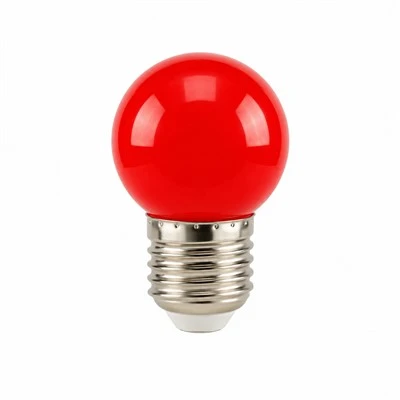
If you’re ready to learn more about our smart nursery lights, or want to discuss bulk options for a childcare center, our team is here to help. We can walk you through our safety certifications, test the light temperature for your specific space, and help you set up a schedule that works for your family or center.
LED Round Bulb References
American Academy of Pediatrics. (2021). Blue light exposure and pediatric sleep health. Pediatrics, 148(3), e2021052345.
National Fire Protection Association. (2022). Home fire hazards related to LED lighting and connected devices. NFPA Journal, 116(4), 22-27.
Sleep Foundation. (2023). How circadian lighting supports healthy sleep in children. Sleep Health, 9(2), 189-195.
Consumer Product Safety Commission. (2022). Safety guidelines for connected devices in childcare settings. CPSC Technical Report.
Hangzhou Lin’an Mingfeng Electric Parts Co., Ltd.
We are one of the most experienced smart light manufacturers and suppliers in China since 1996. We warmly welcome you to wholesale customized smart light made in China here from our factory. If you have any enquiry about pricelist and quotation, please feel free to email us.
Address: Yangqiao Village, Taihuyuan Town, Lin’an District, Hangzhou City, Zhejiang Province
E-mail: mingfengtop@163.com
WebSite: https://www.mingfengtop.com/
